

Being a family caregiver is both meaningful and demanding. Over time, your responsibilities can grow, and you may need more support to help you and your loved one thrive.
This guide is here to help you through this important transition. Continue reading to learn how to recognize when it might be time to find a place with 24/7 assistance, and why that choice is an act of love for all family members. You’ll learn how caregivers make assisted living communities so special and enjoyable for residents, and what you can expect as a family partner.
Table of Contents
- How Do You Know When You’ve Reached Your Limit as a Family Caregiver?
- Why Reaching Caregiver Capacity Is Not a Failure
- What Are the Risks of Continuing Without Additional Support?
- How Senior Living Communities Support Former Family Caregivers
- How to Take the First Steps Toward Transitioning Care
How Do You Know When You’ve Reached Your Limit as a Family Caregiver?
Family caregivers are officially known as informal caregivers, but your responsibilities are anything but informal. The term exists because you have a personal relationship and may not have specialized training, but you take your role as seriously as any professional. In fact, more than half of family caregivers are involved in daily care tasks such as monitoring health status, managing care, and assisting with activities of daily living for older adults. You balance family caregiving with work, family, and community responsibilities.
Over time, you may notice that your caregiving responsibilities feel more overwhelming than they used to, and you have less time and energy to attend to other important parts of your life.
It’s tempting to push forward despite it all. You love your family member deeply and want them to receive the best care. Sometimes, that means bringing in someone else who is skilled and dedicated to caring for your loved one.
Reaching your limit is a difficult moment in family caregiving. It’s okay to struggle with the decision, but it’s also important to give yourself credit for doing that challenging work. Recognizing that you’re overwhelmed and reaching out for help is often the best thing for you and your loved one, who cares about you as much as you care about them.
Why Reaching Caregiver Capacity Is Not a Failure
It’s completely normal to struggle with exhaustion and burnout in caregiving. Maybe the care recipient’s needs have gradually increased and now take more time than you have to give. This often happens with Alzheimer’s disease and other dementias, which progress so gradually that you might not notice until it becomes overwhelming. Chronic conditions often require ongoing management and can lead to an increased strain on caregivers.
Sometimes care needs to remain stable, but your responsibilities outside of caregiving become more intense. You want to continue putting your loved one first. You feel like the only way to do that is to keep providing hands-on care.
Remember that seeking support is an equally valid way to show you love someone. If your family member needs more help than you can provide, expanding your network is a caring and responsible decision. You’re making sure your loved one’s needs are met and taking care of yourself so that you can be the best version of you for everyone in your life.
What Are the Risks of Continuing Without Additional Support?
Caring for a family member can be tough, but it’s also rewarding and fulfilling, and you may want to keep going no matter what. It’s important to remember that caregiver health also matters, and that you can do more for your loved one when you take care of your own well-being.
Pushing through exhaustion often feels like the right thing to do. Yet, mental health experts know that ignoring stress increases the risk of anxiety, depression, and burnout. It’s important to reach out for help before you get to that stage. Outside support keeps your loved one safe and reduces your mental strain, so you’re better able to focus and be attentive during your quality time together.
Family Well-Being on a Larger Scale
A family is a network, and what affects one person can affect all family members. Staying in balance is more challenging when a family member needs significant hands-on care and one or more family members take on that caregiving role. Everyone else’s lives shift, and they continue to shift as care tasks become more intense.
Remember that “family” is the first word in “family caregiver.” You were a family member long before you became a caregiver, and that connection is an ongoing priority. It’s important to seek support before the caregiver-recipient relationship starts to overwhelm the family bond.
The same applies to your relationship with other family members. Seeking caregiving support prevents your stress from spilling over into your home life and straining those other relationships. It’s an act of love toward the entire family and close friends.

How Senior Living Communities Support Former Family Caregivers
The moment you admit that your loved one needs more care than you can provide, a weight lifts off your shoulders. The relief is even stronger when you find a professional team that takes your family member’s well-being as seriously as you do. That’s exactly what you’ll find in Vivante’s luxury senior living communities.
Dedicated Care Providers
The math is simple: A full team of caregivers can do more than a single person, or even several busy family members. At Vivante, our residents’ quality of life is our care team’s sole focus. We have skilled, committed staff handling the logistics of our community’s operations, from ordering supplies to keeping everything clean, so our care team can focus on residents.
Vivante’s personal care services team can provide day-to-day support, including dressing, hygiene, and medication management. We can even help to coordinate any necessary healthcare services.
Our committed activities and wellness programming teams work hard to create an enriching program of events. Our executive chef prepares restaurant-quality meals that are both nourishing and delicious. Residents live each day to the fullest with enjoyable activities that promote physical, cognitive, and social well-being.
Structured and Safe Environments
Family caregiving can make life unpredictable, even in the best circumstances. The responsibilities of adult life draw the primary caregiver’s focus in multiple directions and often change their schedules from day to day. Those schedule changes can then impact care.
Family caregivers do their best, and it’s rarely their intention to cause instability. However, older adults thrive best in structured settings with predictable schedules. Senior living communities provide that logistical and emotional consistency.
With easy access to nutritious food, quality medical care, and enriching programming, Vivante community residents enjoy the stability that helps them thrive. The community setting also provides daily opportunities for social support and connection, both of which are critical to health at all ages.
Stronger Family Relationships
Family caregiving can strengthen a lifelong bond, but some days can strain it. You and your loved one want to connect and spend quality time together, but medical support and personal care take up all the hours you have to give.
Transitioning into senior living means you can let go of that logistical stress. The community’s skilled team handles day-to-day care, so you and your loved one can focus on enjoying time together.
Vivante makes space for those moments. Family-focused activities and events keep loved ones involved in the joyful aspects of each other’s lives, while our care staff keeps relatives informed about all aspects of the resident’s life.
How to Take the First Steps Toward Transitioning Care
Moving into a senior living community is a significant transition for the entire family. It starts with open, honest conversations among the care recipient, loved ones, and health care providers.
Discussing Needs
Every senior living resident has different needs. Many older adults thrive in an assisted living facility, where care staff can provide medication management and assist with tasks of daily living such as dressing, grooming, and mobility. Others live with moderate to severe dementia and need to live in memory care communities, where there is a higher level of supervision and staff have specialized training in cognitive decline.
Find a community that treats you as a partner from day one. At Vivante, we work closely with families to understand potential residents’ needs and develop a care plan that will help them live each day to the fullest.
Finding the Right Community
The next step is for the prospective resident and their family to research and tour senior living communities. Each community has a unique focus and atmosphere, and it’s important to find the one that feels most like home.
You’re looking for an atmosphere that matches your loved one’s lifestyle and personal preferences. Vivante focuses on refined luxury, with resort-quality amenities and engaging activities that promote physical, cognitive, emotional, and social well-being.
Vivante residents enjoy recreational outings and build lifelong friendships. They come to see Vivante as home, and welcoming their loved ones is part of that feeling. Our open-door policy keeps connections strong and makes families feel like part of the community.
Establishing a Connection
The right senior living solution supports both care recipient and caregiver. Consider how you feel about each community you visit, paying special attention to how the team works with you as a family member and informal caregiver. You should feel comfortable asking any questions you have, from meal preparation details to how the community handles end-of-life care.
Vivante is committed to respecting our residents’ family members as care partners. We value communication and hope you will share your needs with us, so we can care for your loved one as compassionately as you have.
Enter a New Phase of Family Living
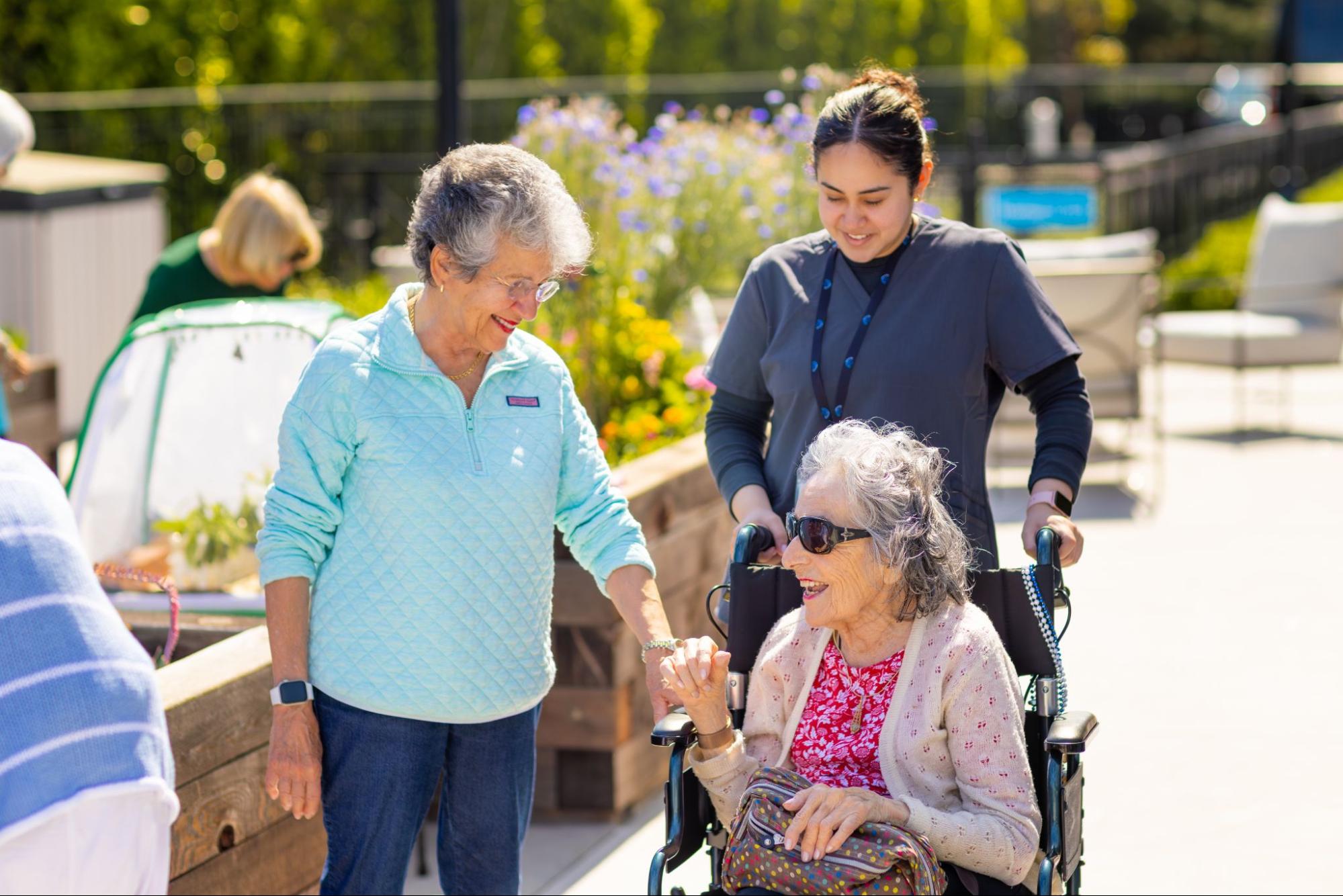
Senior living communities can provide the support your loved one needs, giving you peace of mind knowing they are happy and cared for. Tour Vivante today and see what this next phase can look like for your family.
FAQs
What does it mean to reach capacity as a family caregiver?
A family caregiver has reached capacity when the required care exceeds what they can safely or sustainably provide. Sometimes it happens because care needs have intensified or caregiver responsibilities have changed. It can also build up from cumulative stress, which makes the same tasks harder to handle.
Knowing when you’re at capacity is part of being a responsible caregiver. Reaching out for support means your loved one will continue to get the care they need, and you can take care of yourself.
Is it normal for family caregivers to feel guilty about transitioning care?
Yes, many family caregivers feel guilty about transitioning their loved one into a senior living community. It’s important to focus on the positive effects of this transition: round-the-clock care availability, a community of neighbors, and more space and time to be a family. Many families find that residents actually do better in a community than at home, due to the increased socialization opportunities, consistent access to nutritious food, and wellness offerings.
How can senior living help former family caregivers?
Senior living communities provide professional care, so former caregivers can refocus on strengthening family bonds. Visits become about enjoying one another. Stress decreases, and former caregivers have more emotional energy available to connect with their loved ones.
When should a family caregiver consider assisted living or memory care?
It’s wise to consider an assisted living or memory care community when it becomes difficult to manage a loved one’s health, safety, or emotional well-being at home. The Vivante team can help you determine which setting is best for your family member and what we can do to help them live their best life.
How does Vivante support families during this transition?
Vivante prioritizes open communication and family guidance throughout the transition process. Our personalized care model relies on family input, so loved ones can feel confident in the care their relative is receiving. We provide regular updates and a comfortable setting for visits, which provides the continuity our residents need to feel at home in their new space.